
Your vehicle’s glass is designed to be strong, but it’s not invincible. Seasonal temperature changes—especially extreme cold in winter and intense heat in summer—are among the leading causes of windshield damage. Understanding how weather affects auto glass and taking preventive steps can save you time, money, and unnecessary stress.
In this guide, we’ll break down how cold and heat impact your windshield, how to prevent seasonal damage, and when to consider professional windshield repair or windshield replacement services.
Why Seasonal Changes Are a Threat to Auto Glass

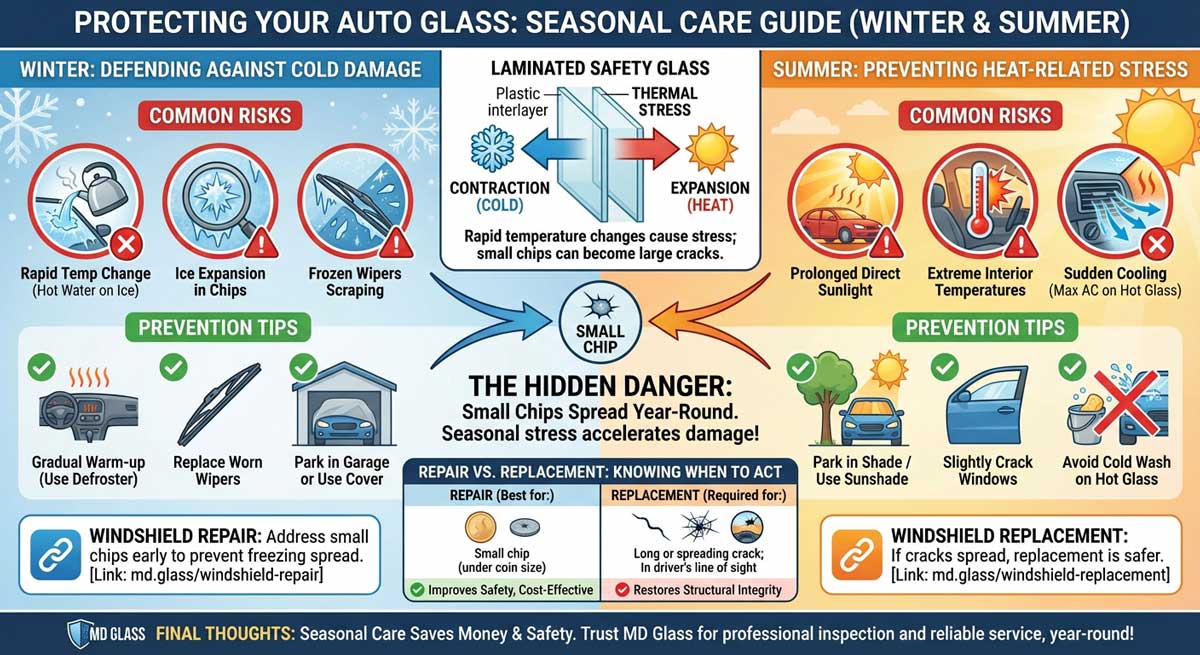
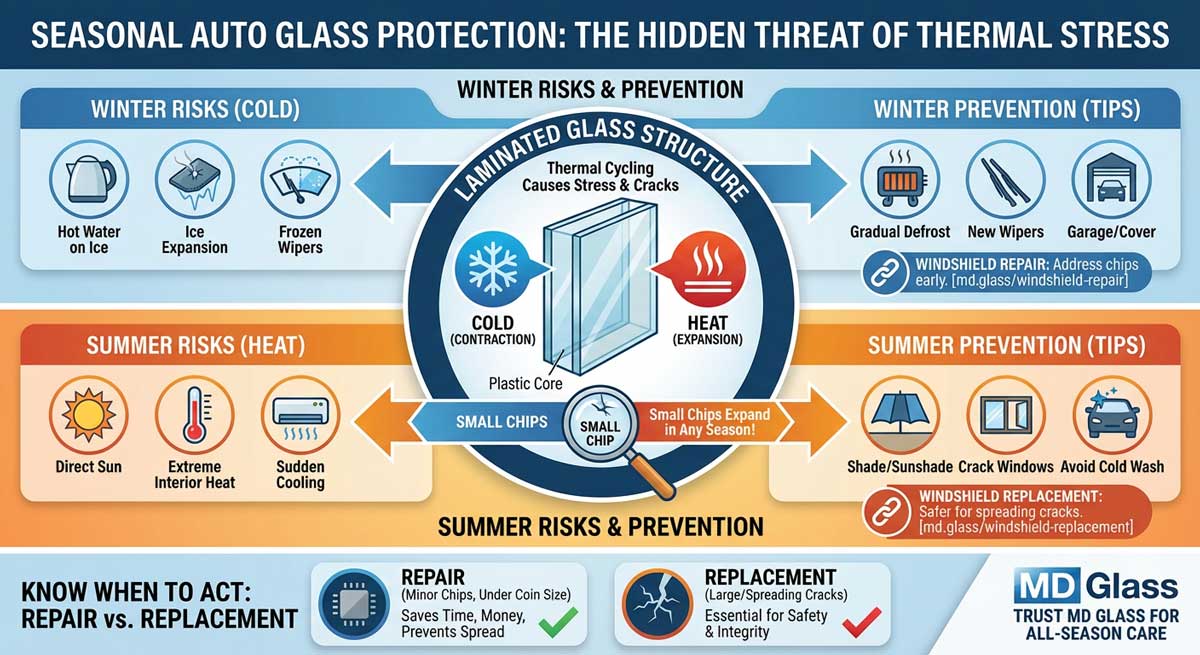
Windshields are made from laminated safety glass, which consists of two layers of glass with a plastic interlayer in between. While this structure improves safety, it is still sensitive to thermal stress.
When temperatures change rapidly, glass expands and contracts. Even a small chip can quickly turn into a long crack if exposed to sudden heat or cold. Compared to many competitors who focus only on visible damage, proactive seasonal care addresses the root cause before problems spread.
Winter Auto Glass Care: Protecting Against Cold Damage
Cold weather creates unique challenges for your windshield:
Common Winter Risks
Rapid temperature changes (pouring hot water on icy glass)
Ice expansion inside existing chips or cracks
Frozen windshield wipers scraping the glass surface

Winter Prevention Tips
For consultation and appointment booking, please contact:
Never use hot water to defrost your windshield—this can cause instant cracking.
Gradually warm up your car using the defroster.
Replace worn wiper blades before winter starts.
Park in a garage or use a windshield cover when possible.
If you notice a small chip during winter, addressing it early with professional
👉 Windshield Repair
can prevent the damage from spreading due to freezing temperatures.
Summer Auto Glass Care: Preventing Heat-Related Stress
Heat can be just as damaging as cold—sometimes even more so.
Common Summer Risks
Prolonged exposure to direct sunlight
Extreme interior temperatures
Sudden cooling from blasting the AC on a hot windshield
Summer Prevention Tips
Park in shaded areas or use a sunshade.
Slightly crack your windows to reduce interior heat buildup.
Cool your car gradually instead of turning the AC to max immediately.
Avoid washing your car with cold water when the glass is extremely hot.
If cracks spread beyond repair during hot months, windshield replacement may be the safest option.
For consultation and appointment booking, please contact:
The Hidden Danger of Small Chips Year-Round
One key insight many competitors overlook: most windshield replacements start as minor chips. Seasonal stress accelerates this process. A chip that seems harmless in spring can quickly expand during the first heatwave or frost.
Routine inspections—especially during seasonal transitions—are one of the most cost-effective ways to protect your auto glass.
Repair vs. Replacement: Knowing When to Act
| Damage Type | Best Solution |
|---|---|
| Small chip (under a coin size) | Windshield repair |
| Long or spreading crack | Windshield replacement |
| Damage in driver’s line of sight | Replacement recommended |
| Multiple cracks | Replacement required |
Choosing the right solution early not only improves safety but also maintains the structural integrity of your vehicle.
Final Thoughts: Seasonal Care Saves Money and Safety
Seasonal auto glass care isn’t just about reacting to damage—it’s about preventing it. By understanding how cold and heat affect your windshield and taking simple preventive steps, you can extend the life of your auto glass and avoid costly repairs.
For professional inspection, fast service, and reliable results, trust MD Glass to handle everything from minor repairs to full windshield replacement—no matter the season.