





Your windshield is more than just a piece of glass—it’s a critical safety component that protects you from debris, supports your vehicle’s structural integrity, and ensures clear visibility while driving. When damage occurs, the question isn’t just whether you can fix it, but whether you should. Understanding the technical criteria that determine when a windshield is beyond repair can save you money, time, and potentially your life.
Understanding Windshield Damage: Windshield Repair vs. Replacement
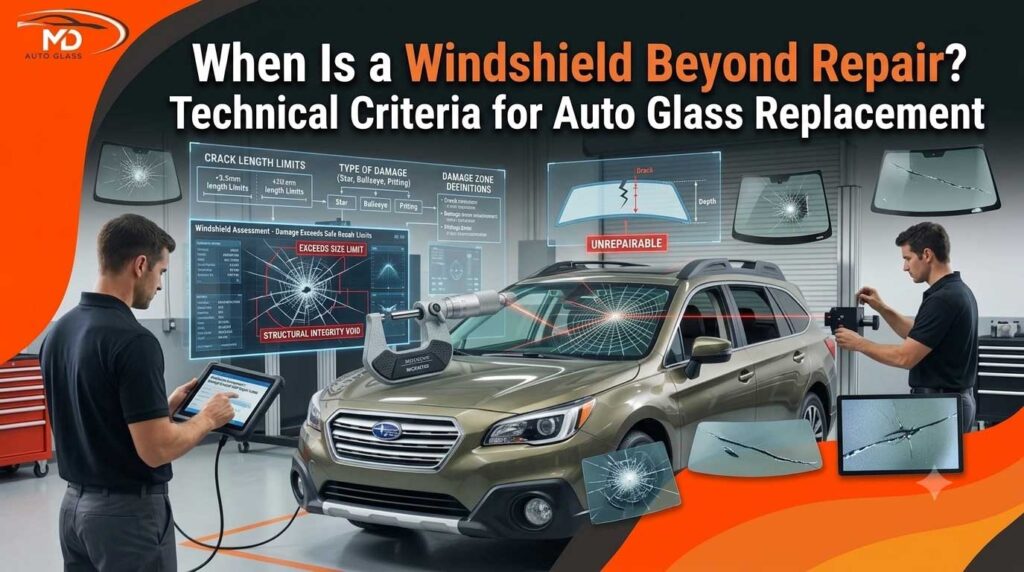
Not all windshield damage is created equal. Modern auto glass technology has made it possible to repair many types of damage, but there are clear limits to what can be safely fixed. The decision between repair and replacement depends on several technical factors that professional technicians evaluate before recommending a course of action.
The Basic Rule: Size Matters

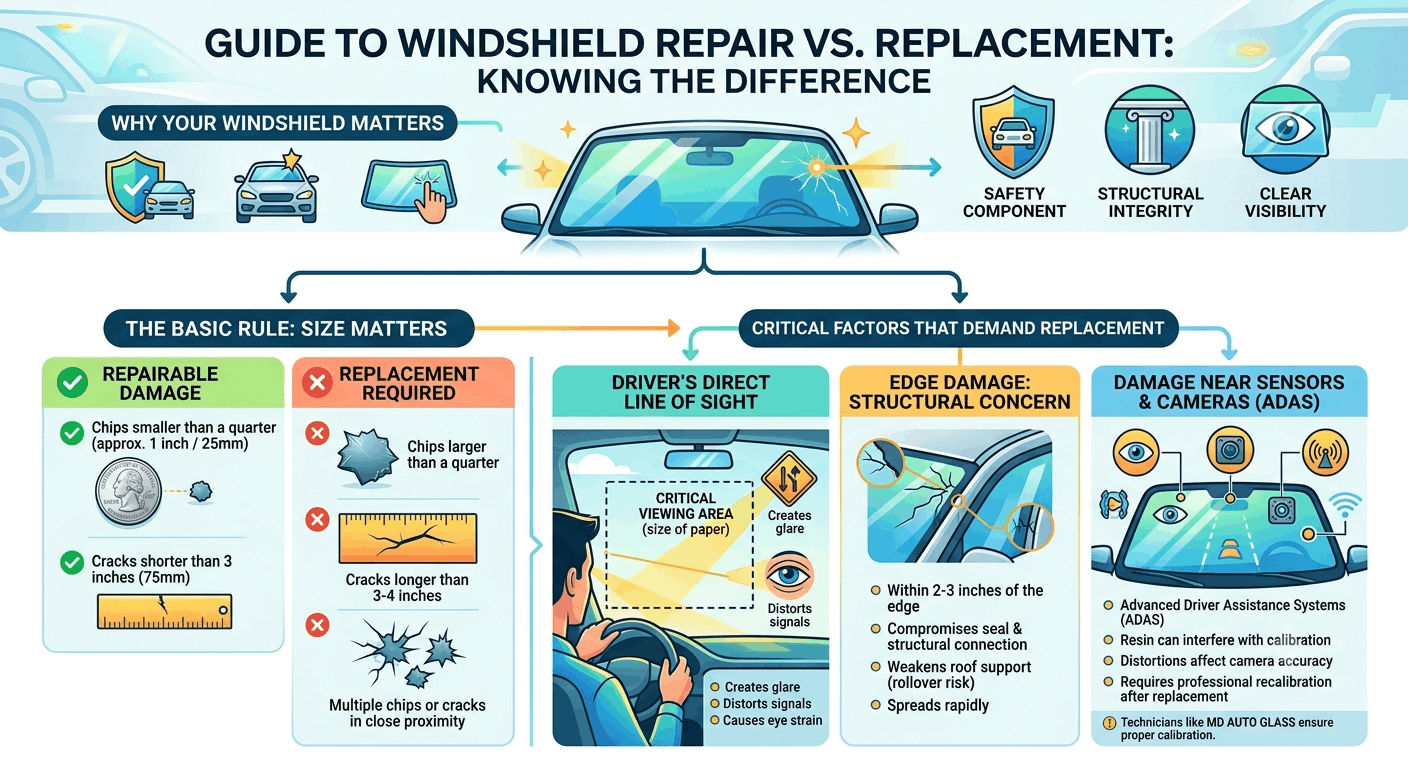
The most straightforward criterion for determining repairability is size. Industry standards generally follow these guidelines:
Repairable damage:
- Chips smaller than a quarter (approximately 1 inch or 25mm in diameter)
- Cracks shorter than 3 inches (75mm in length)
Replacement required:
For consultation and appointment booking, please contact:
- Chips larger than a quarter
- Cracks longer than 3-4 inches
- Multiple chips or cracks in close proximity

However, size alone doesn’t tell the whole story. The location, depth, and type of damage all play crucial roles in the final decision.
Critical Location Factors That Demand Replacement
Damage in the Driver’s Direct Line of Sight
Even small chips or cracks directly in the driver’s field of vision often require replacement rather than repair. While modern resin repair techniques have improved significantly, they still leave a slight distortion or mark. In the critical viewing area—roughly the size of a sheet of paper directly in front of the driver—even minor visual imperfections can:
- Create glare from oncoming headlights
- Distort traffic signals and signs
- Cause eye strain during long drives
- Compromise safety during emergency maneuvers
Professional auto glass services like MD AUTO GLASS prioritize safety over cost savings and will recommend replacement when damage affects this critical zone.
For consultation and appointment booking, please contact:
Edge Damage: A Structural Concern
Cracks or chips within 2-3 inches of the windshield’s edge present a unique challenge. The perimeter of your windshield is where it bonds to the vehicle frame, creating a crucial structural connection. Damage in this area:
- Compromises the seal integrity
- Increases the likelihood of the crack spreading
- Weakens the windshield’s ability to support the roof during a rollover
- May allow water infiltration leading to rust and further damage
Edge cracks tend to spread rapidly due to temperature fluctuations and vehicle vibrations. What starts as a small edge chip can quickly become a crack that spans the entire windshield, making immediate replacement the most cost-effective long-term solution.
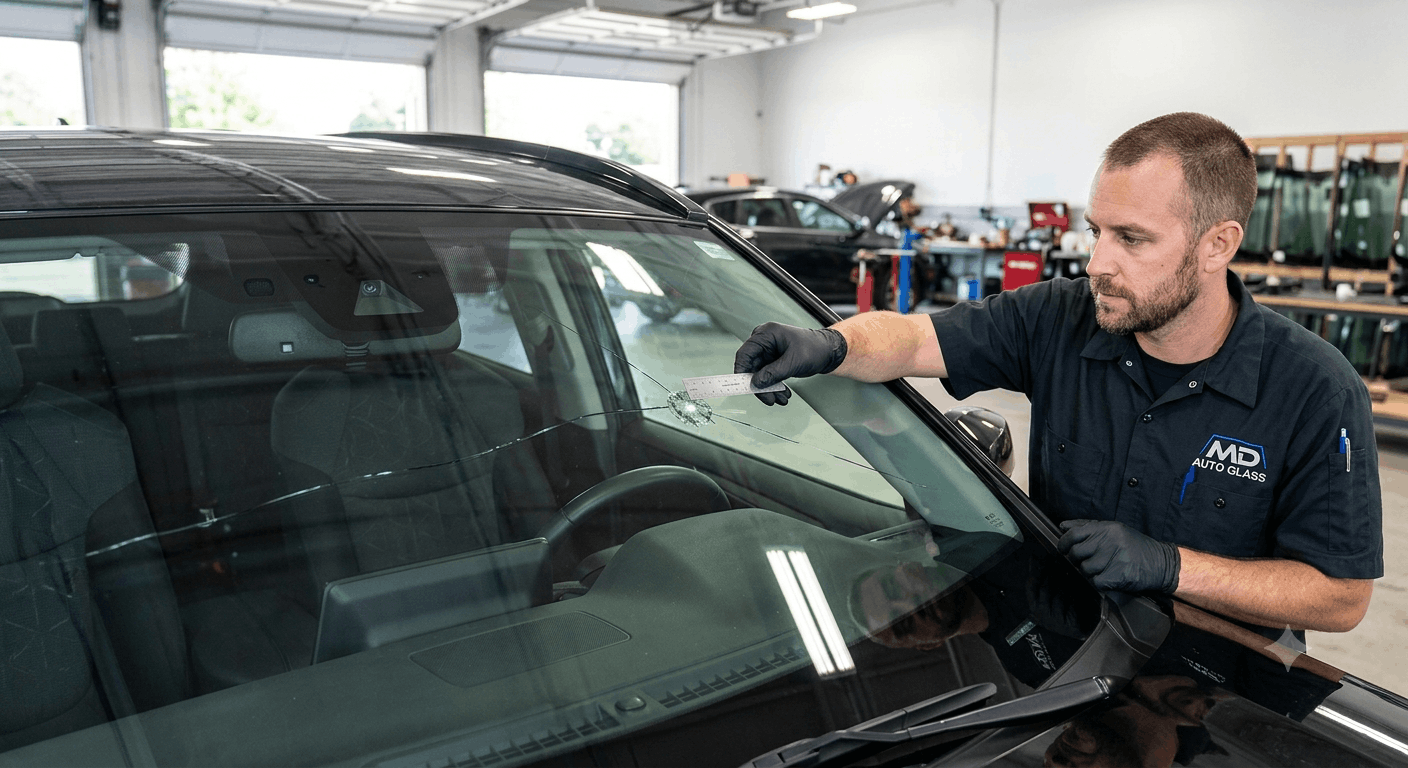
Damage Near Sensors and Cameras
Modern vehicles equipped with Advanced Driver Assistance Systems (ADAS) have cameras, sensors, and other technology embedded in or near the windshield. These systems include:
- Forward collision warning sensors
- Lane departure warning cameras
- Automatic emergency braking systems
- Rain sensors
- Heads-up display (HUD) projectors
Damage near these components often requires replacement because:
- Repair resin can interfere with sensor calibration
- Even minor distortions affect camera accuracy
- The repair process itself may damage sensitive electronics
- Post-repair recalibration may be impossible or unreliable
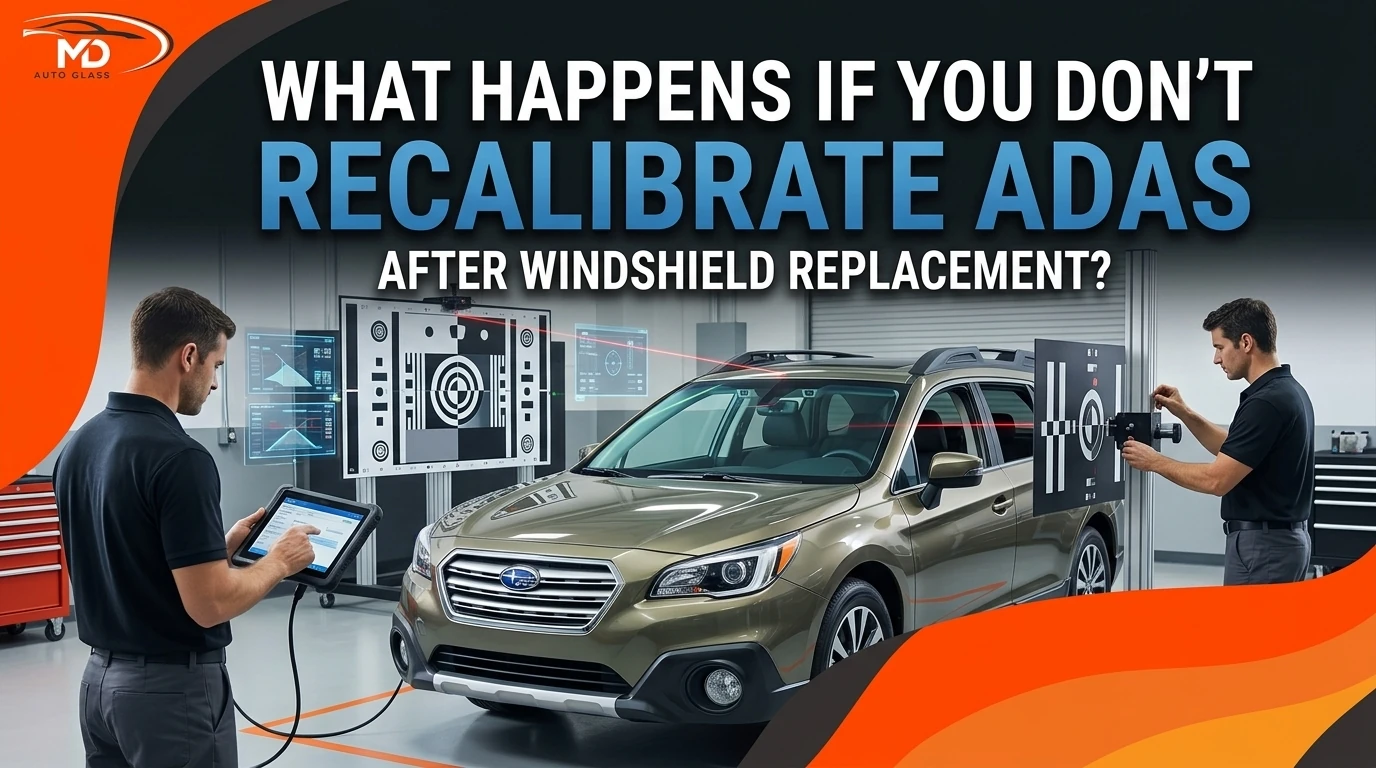
After windshield replacement involving ADAS-equipped vehicles, professional recalibration is essential—a service that qualified technicians at facilities like MD AUTO GLASS provide to ensure your safety systems function correctly.